
What Is High Blood Pressure or Hypertension and its complications?
Have you experienced symptoms such as headache, shortness of breath, or noticed nosebleeds? If yes, it may be high blood pressure. First, you should check your blood pressure and confirm whether it is normal or not. Because hypertension (high blood pressure) is a silent killer, many people do not notice the symptoms and live with it for years.
Many people feel headaches for a long period, but what they think is that it may be caused by stress or lack of proper sleep. However, it may be high blood pressure, which is not identified by the person until they measure their blood pressure.
So, high blood pressure or Hypertension is considered a silent killer, and it slowly affects organs like the heart, brain, kidneys, eyes, and blood vessels. Here in this article, I have explained everything about blood pressure hypertension in very simple language, with practical examples based on famous organizations such as the Mayo Clinic and Cleveland clinic.
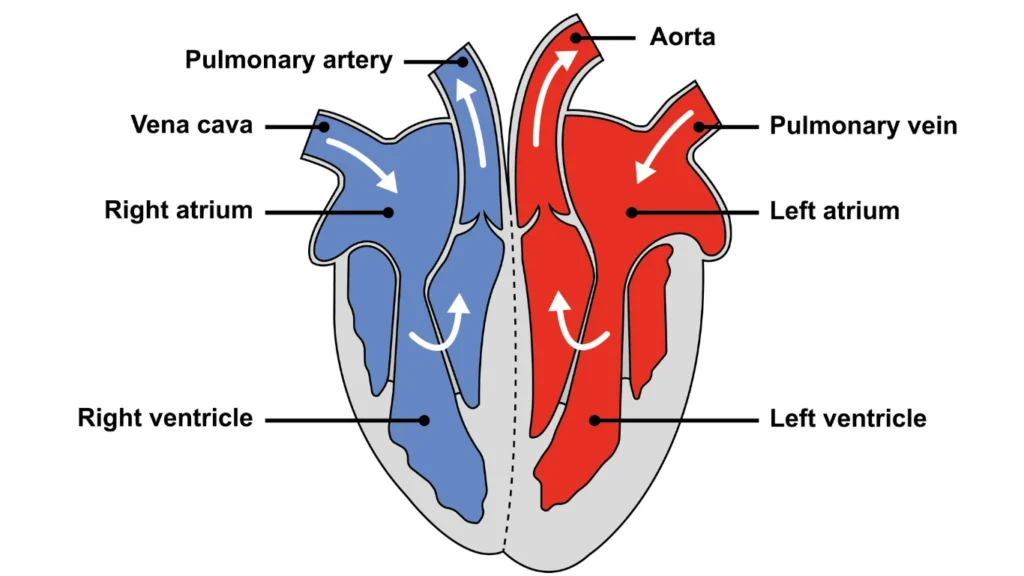
How Your Heart Works
Heart is Fist sized organ. Main function of the heart is move blood through out the body.
Role of Arteries
- Arteries are upper chambers of the heart
- Arteries carries blood blood away from the heart to different parts of the body.
- Arteries have thick and elastic walls to handle high pressure
- Arteries helps to maintain blood pressure and continuous flow
Right Artery
It carry’s deoxidated blood and It moves blood from the heart to the lungs
Left Artery
Carries oxygenated blood from the heart to the whole body
Role of Ventricles
- Ventricles are lower chambers of the heart
- Ventricles pumps blood out of heart
- Responsible for powerful pumping action
Right Ventricle
Pumps impure blood to the lungs and it helps in removing carbon dioxide
Left Ventricle
Pumps pure blood to the whole body
What is Blood Pressure
Blood pressure is the measure of the force of blood inside your arteries. Each time your heart beats, it pumps blood into a large artery called the aorta. This happens 60 to 100 times a minute, 24 hours a day. Your aorta connects to other arteries that deliver oxygen and nutrients to all your organs and tissues.
Blood pressure doesn’t stay the same all the time. It depends on your actions. If you are exercising or excited, your blood pressure goes up. If you are at rest, your blood pressure is lower.
High Blood Pressure or Hypertension
High blood pressure is nothing but When the force of blood pushing against the artery walls is consistently too high and the heart has to work harder to pump blood. It is also called as Hypertension.
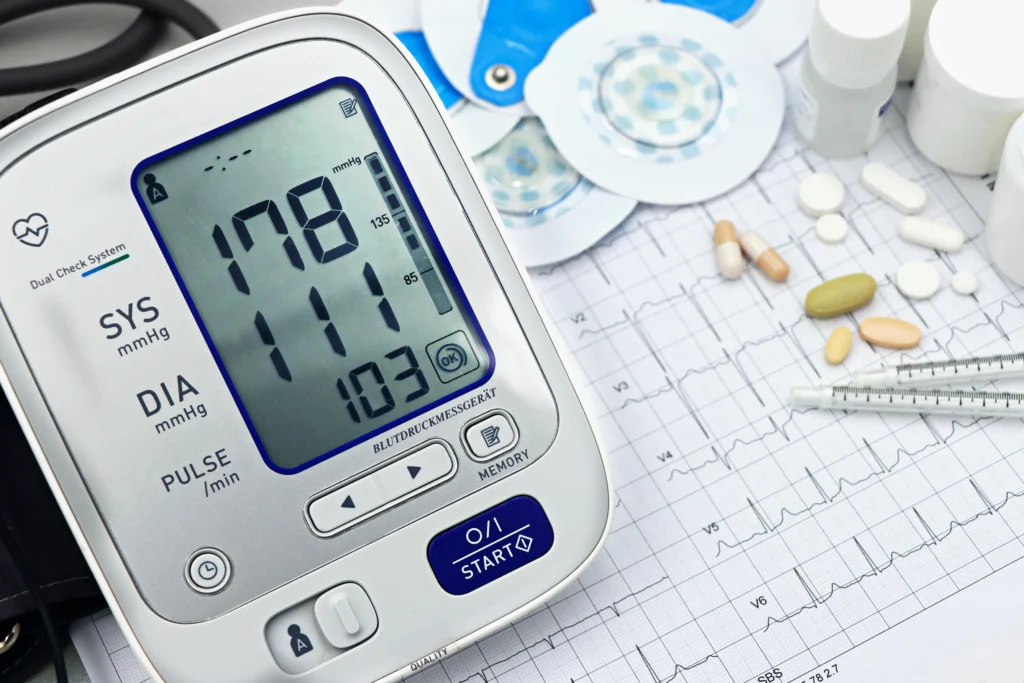
High blood pressure measures in millimeters of mercury (mmHg). Reading has two numbers
Systolic Blood Pressure
This is top number. its the pressure on your artery walls when you heart contracts
Diastolic Blood Pressure
This is the bottom number, its the pressure between beats when your heart relaxes
The American college of Cardiology and the American Heart Association divided blood pressure into four categories.
| Normal Blood Pressure | Lower than 120/80 mmHg |
| Elevated Blood Pressure | Lower than 129/80 mmHg |
| Stage 1 Hypertension | Lower than 139/89 mmHg |
| Stage 2 Hypertension | Higher than 140/90 mmHg |
Note
If your blood pressure higher than 180/120 mm Hg, then emergency medical support is required and Un treated hypertension is increases the risk of Heart attack, stroke and other serious health problems.
Types of Hypertension
There are two main types of Hypertension
Primary Hypertension
If anyone in your family has high blood pressure, it may cause high blood pressure in you. This is called primary hypertension.
Secondary Hypertension
If you have an identifiable cause of hypertension, it is called secondary hypertension.
Again, there are four types of hypertension that occur in certain situations. These are
| White coat Hypertension | When your blood pressure is normal at home but high when it is checked at the hospital. |
| Masked Hypertension | When your blood pressure is normal at the hospital but high when it is checked at home. |
| Sustained Hypertension | When your blood pressure is high wherever you check it. |
| Nocturnal Hypertension | When your blood pressure is high during sleep. |
Causes of Hypertension
Have you observed or not? I don’t know, but most doctors can identify only one cause to confirm hypertension. However, many factors can contribute to hypertension. These are
- Being over age 55
- History in your biological family
- Smoking or using tobacco
- Having overweight or obesity
- Eating foods high in sodium
- Lack of physical activity
- Drinking too much alcohol
Apart from that, in some cases certain condition may cause of hypertension. these are
- Conditions like obstructive sleep apnea, renal artery stenosis, primary aldosteronism and thyroid disease
- Medications like those that manage ADHD ( Attention-Deficit/Hyperactivity), inflammation, autoimmune disease and mental health condition
- Addictive substances like alcohol, nicotine and cocaine
Symptoms of Hypertension
As you know, I have already discussed that many patients may have hypertension for years without noticing any symptoms. The World Health Organization estimates that 46% of adults with hypertension are unaware that they have it.
If your blood pressure is extremely high, you may have symptoms like
- Change to your mental function
- Chest pain
- Dizziness
- Edema
- Heart Palpitations
- Peeing less than usual
- seizures
- Severe headache
- signs of stroke
- vision problems
Complications of hypertension
If you have hypertension (high blood pressure) and it is not treated, it may damage your arteries and overwork your heart. This condition may lead to complications such as
- A-Fib – A chaotic rhythm in your heart that affects how well it can pump blood.
- Chronic Kidney disease
- Cognitive impairment and dementia Changes
- Coronary artery disease
- Heart attack
- Heart Failure
- Hypertensive Retinopathy
- Peripheral artery disease
- Erectile dysfunction
- Stroke
When should you see a doctor?
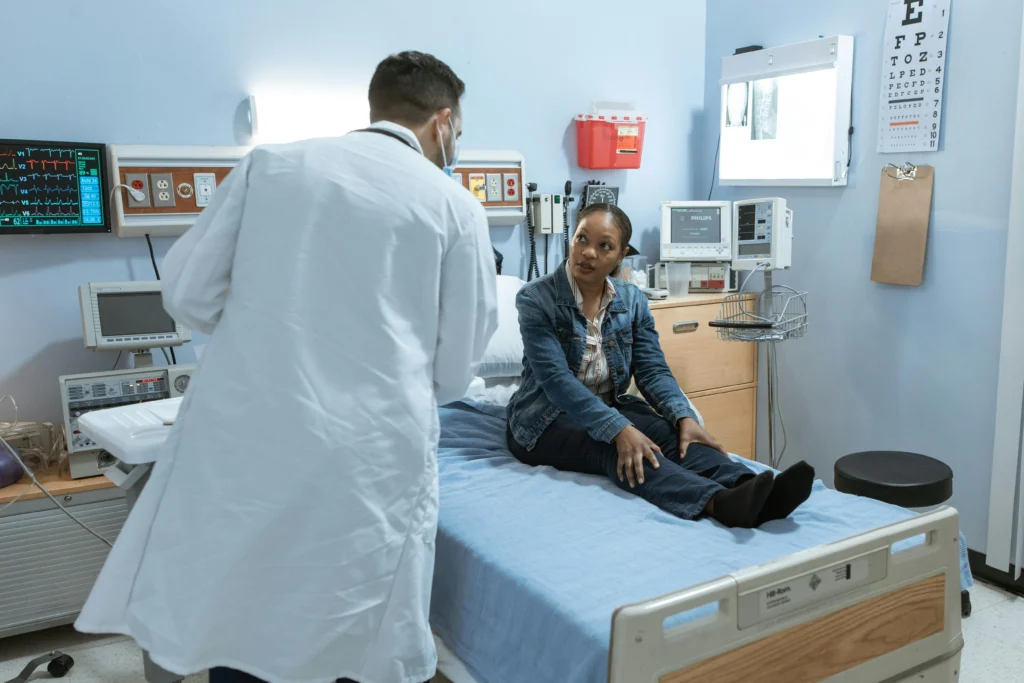
Blood pressure screening is very important for general health care. You need to check your blood pressure regularly, depending on your age and overall health.
- Ask your doctor for blood pressure reading at least every two years starting at age 18.
- If your age 40, or you are at below 40 with higher risk of high blood pressure ask for check every year
- If you have high blood pressure or other risk factors for heart disease, more frequent blood pressure checkups are required.
Management and treatment for Hypertension
Even if you take medicines for high blood pressure, it is very important to change your habits. Sometimes, this is called lifestyle changes. If you change your habits, it can help lower your blood pressure, which includes:
- Maintain healthy weight
- Eat nutrition food
- Cut down on sodium
- Get enough potassium
- Need enough physical activity
- Quite smoking
- Limit or avoid alcohol
FAQs
How does hypertension affect eye vision?
Hypertension can damage tiny blood vessels in your eyes which is leading to condition called Hypertensive retinopathy. This condition may cause to
- Narrow or damage blood vessels in the retina
- Reduce proper blood flow to the eyes
Most people have diabetes along with high blood pressure. Is there any link between these two conditions?
Yes, There is a strong connection between both conditions such as high blood pressure and Diabetes, because
- Damage to blood vessels
- Insulin resistance
- Kidney involvement
- Common risk factors like obesity, unhealthy diet, lack of physical activity
What are the reasons for high blood pressure in 18 year old individuals?
Yes, High blood pressure can occur for young people also because of lifestyle habits or underlying health conditions. such as
- Un healthy diet
- Over weight or Obesity
- Lack of physical activity
- Stress and anxiety
- Smoking and alcohol
- Family History
Reference
Cleveland Clinic – Heart Overview, Causes, Symptoms, Management and Treatment and Complications
Mayo Clinic – High Blood pressure overview
Conclusion
High blood pressure or hypertension, is a silent killer because many people live with it without being aware of it. If it continues like this, it may lead to a very high risk of complications, so it is very important to check your blood pressure regularly, depending on your age and health condition.
If you have high blood pressure, it is very important to change your lifestyle habits along with taking medications to avoid complications. If you have a family history of high blood pressure, lifestyle changes are very important, along with regular physical activity and regular blood pressure checkups.
Disclaimer
This information in the article is for general educational and awareness purposes only. It is not replace for medical advice or treatment. Always consult a qualified Doctor for diagnosis, treatment, or medical guidance regarding health conditions.
3 thoughts on “High Blood Pressure or Hypertension and its complications.”