
Is Your Blood Sugar Is Low or High? Symptoms and Solutions.
Are you doubting whether you have diabetes? If you are urinating frequently, feeling tired and weak, having blurry vision, or experiencing slow-healing sores, then it may be diabetes.
It is very important to consult a doctor urgently if your blood sugar is low or high, because diabetes can cause severe complications such as blindness, kidney failure, heart attacks, stroke, and lower limb amputation.
But don’t worry diabetes can be treated, and its consequences can be avoided or delayed with diet, physical activity, medication, and regular screening and treatment for complications.
If you go through this article, you will be very clear about diabetes and you will gain confidence to avoid or delay it without using diabetes medicine, because I have explained everything clearly for easy understanding with the help of data from Mayo Clinic and Cleveland Clinic.
What is the Role of Glucose?
Glucose is nothing but sugar which is source of energy for the cells. It plays a key role in make up muscles and other tissues. As you know glucose comes from the food as well it comes from liver also.
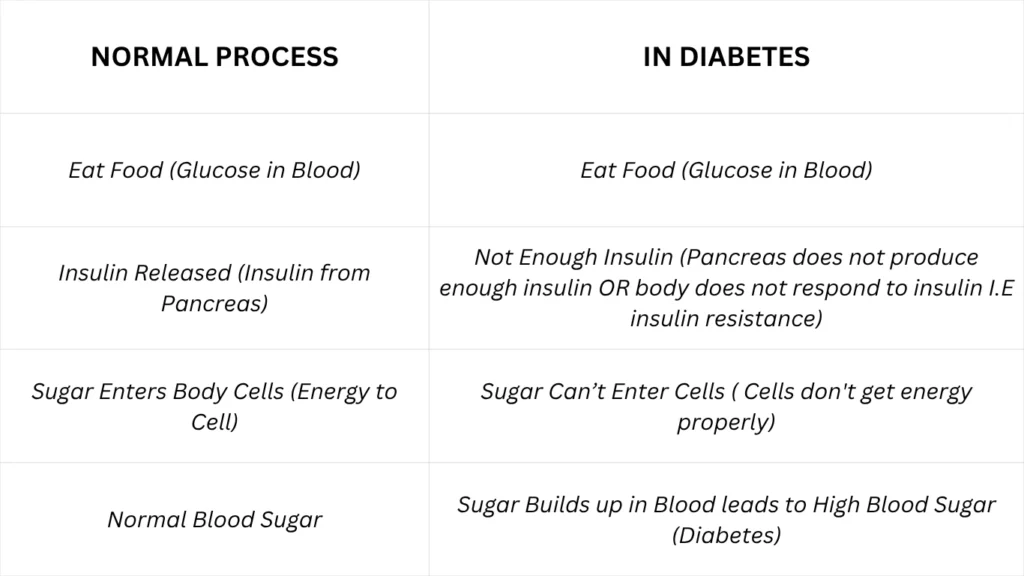
Sugar is absorbed into the bloodstream, where it enters cells with the help of insulin.
Here liver role is that it stores and makes glucose and when your glucose levels are low that is when you haven’t eaten a while then the liver breaks down stored glycogen into glucose which keeps your glucose level within a typical range.
What is the Role of Insulin?
- Insulin is a hormone, which is comes from a gland that is pancreas that placed behind and below the stomach.
- The pancreas releases insulin into the blood stream.
- Insulin travels in the blood stream and helps sugar enter the body’s cells thus insulin lowers the amount of sugar in the blood stream
-
Important Note
Exact cause of most types of diabetes is unknown, In theses cases sugar builds up in the blood stream because the pancreas doesn’t produce enough insulin.
Types of Diabetes
| Type 2 Diabetes | This is the most common type of diabetes. With this type, your body doesn’t make enough insulin or your body’s cells don’t respond normally to the insulin (insulin resistance). It mainly affects adults. |
| Prediabetes | This type is the stage before Type 2 diabetes. Your blood glucose levels are higher than normal but not high enough to be officially diagnosed with Type 2 diabetes.
|
| Type 1 diabetes | This type is an autoimmune disease in which your immune system attacks and destroys insulin producing cells in your pancreas for unknown reasons. Up to 10% of people who have diabetes have Type 1. It’s usually diagnosed in children and young adults, but it can develop at any age.
|
| Gestational diabetes | This type develops in some people during pregnancy. It usually goes away after pregnancy. But you’re at a higher risk of developing Type 2 diabetes later in life.
|
| Type 3c diabetes | This form of diabetes happens when your pancreas damaged, which affects its ability to produce insulin |
| Latent autoimmune diabetes in adults (LADA) | LADA also results from an autoimmune reaction, but it develops much more slowly than Type 1. People diagnosed with LADA are usually over the age of 30.
|
| Maturity onset diabetes of the young (MODY) | MODY, also called monogenic diabetes, happens due to an inherited genetic mutation that affects how your body makes and uses insulin. It affects up to 5% of people with diabetes and commonly runs in families |
| Neonatal diabetes
|
This is a rare form of diabetes that occurs within the first six months of life. It’s also a form of monogenic diabetes. About 50% of babies with neonatal diabetes have the lifelong form called permanent neonatal diabetes mellitus. For the other half, the condition disappears within a few months, but it can come back later in life. This is called transient neonatal diabetes mellitus |
| Brittle diabetes | Brittle diabetes is a form of Type 1 diabetes that’s marked by frequent and severe episodes of high and low blood sugar levels.
|
Causes of Diabetes
As you know, too much glucose circulating in your bloodstream causes diabetes, and glucose levels differ depending on the type of diabetes. Causes of diabetes includes
- Insulin resistance
- Autoimmune disease
- Hormonal imbalance
- Pancreatic damage
- Genetic mutations
Note
Long term use of certain medications can also lead to Type 2 diabetes including HIV Medications and corticosteroids.
Symptoms of Diabetes
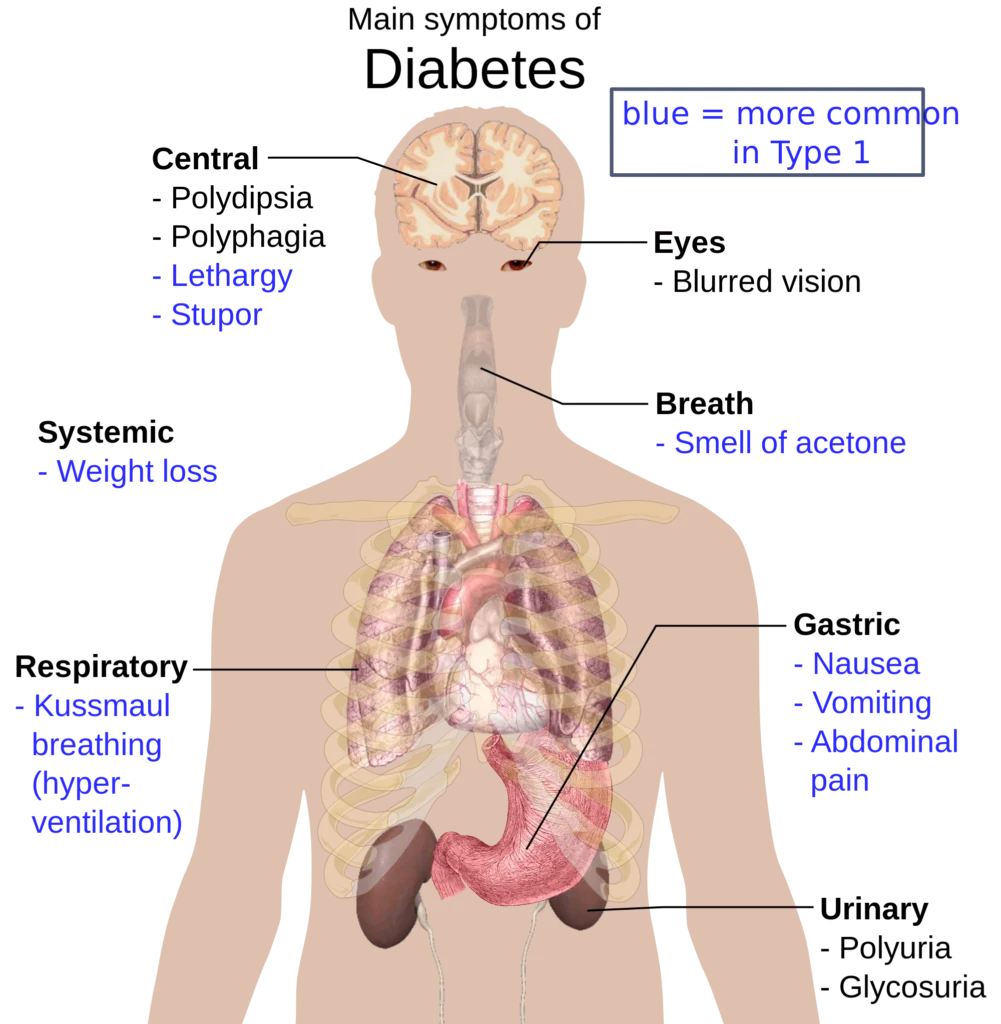
Whether you have observed it or not, diabetes symptoms vary depending on high blood sugar levels. People with prediabetes or gestational diabetes may not have symptoms. In type 1 diabetes, symptoms come on quickly and tend to be more severe.
Some of the symptoms of Type 1 diabetes and Type 2 diabetes are
- Feeling more thirsty
- Urinating frequently than usual
- Losing weight without trying.
- Presence of ketones in the urine.
- Feeling tired and weak.
- Having blurry vision.
- Having slow healing sores.
Note
- Type 1 diabetes can start at any age but it starts during childhood or teen years
- Type 2 diabetes can develop at any age and it is more common in people older than 40 but type 2 diabetes in children is increasing.
- If you have any symptoms of diabetes such as thirsty or frequent urination then you need to meet endocrinologist for diabetes medicine and treatment.
Risk Factors of Diabetes
- Risk factors of diabetes depend on the type of diabetes but family history may play a role in all types.
- your Environmental factors and geography may add to the risk of Type 1 diabetes
- If you have type 1 diabetes autoantibodies through your family members then you may have risk of developing type 1 diabetes
- Race or ethnicity also also may rise the risk of type 2 diabetes. In this case high risk people are black, Hispanic, American Indian and Asian American people.
What are the complications if blood sugar is low or high?
Diabetes may lead to acute and long term complications.
Acute diabetes complications
Acute diabetes complications can be life threatening
Hyperosmolar Hyperglycemic state (HHS)
When your blood sugar levels are very high that is over 600 mg/dL for a long time, which is leading to severe dehydration and confusion. It mainly affects on type 2 diabetes people.
5 thoughts on “Is Your Blood Sugar Is Low or High? Complete Guide”