
ICD 10 Code for GERD Without Esophagitis and Top 3 Complications
What is ICD 10 CM Code
You can describe ICD 10 CM Code as International Classification of Diseases – Tenth Revision – Clinical Modification Code. You can used this code for classify medical diagnoses and classify mortality data from death certificates.
ICD 10 CM is a set of diagnosis codes used in the united states of America and It was developed by U.S Department of health and Human services as an adaption of the ICD 10 with authorization from the WHO in 2015.
ICD 10 code for GERD without esophagitis and other codes
- ICD 10 Code for GERD without esophagitis is K21.9
- ICD 10 Code for GERD with esophagitis without bleeding is K21.00
- ICD 10 Code for GERD with esophagitis with bleeding is K21.01
You can find the GERD-related ICD-10-CM codes in the table below.
ICD 10 CM Code |
Disease |
| K20.9 | Esophagitis (inflammation of the esophagus) |
| K20.8 | Other esophagitis |
| K22.70 | Barrett’s esophagus without dysplasia |
| K22.710 | Barrett’s esophagus with low-grade dysplasia |
| K22.711 | Barrett’s esophagus with high-grade dysplasia |
| R12 | Heartburn |
| R07.9 | Chest pain, unspecified |
| R11.10 | Vomiting, unspecified |

Causes of GERD
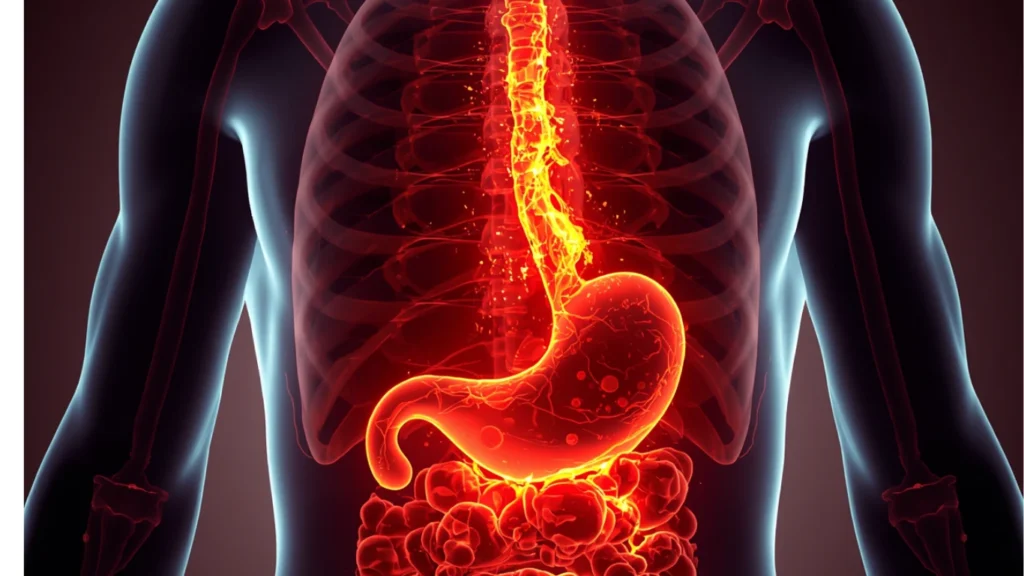
If you feel regular acid reflux, it can lead to GERD (Gastroesophageal Reflux Disease).
You can find the lower esophageal sphincter (LES) at bottom of the esophagus as a circular band of muscle. Normally LES relaxes to allow food and liquid to flow into the stomach. Then the LES closes again.
If LES weakens, The LES does not relax, stomach acid can flow back into the esophagus. If it happens consistently, can lead to GERD and this condition irritates the lining of the esophagus, causing it to become inflamed.
Risk Factors of GERD
If you can find, These are the conditions can increases the risk of GERD. Such as
- Obesity
- Bulging of the top of the stomach up above the diaphragm, known as a hiatal hernia.
- Pregnancy.
- Connective tissue disorders, such as scleroderma.
- Delayed stomach emptying.
These are the factors can aggravate acid reflux include,
- Smoking
- Alcohol
- Fatty or fried foods
- Certain medicines
- Eating large meals or eating late at night
Symptoms of GERD
These are the common symptoms of GERD, Include
- A burning sensation in the chest
- Backwash of food or sour liquid in the throat.
- Upper belly or chest pain.
- Trouble swallowing, called dysphagia.
- Sensation of a lump in the throat.
If you have nighttime acid reflux, you also might experience
- An ongoing cough.
- Inflammation of the vocal cords, known as laryngitis.
- New or worsening asthma.

Top 3 Complications of GERD
Long lasting inflammation in the esophagus can lead to
- Inflammation of the tissue in the esophagus, known as esophagitis.
- Narrowing of the esophagus, called an esophageal stricture.
- Precancerous changes to the esophagus, known as Barrett esophagus.
Preventing tips for GERD
These prevention tips may reduce the risk of GERD.
- Eat sparingly and slowly
- Avoid Fatty, Spicy and oily foods
- Don’t drink carbonated beverages
- Stay up after eating
- Lose weight if it’s advised
- If you smoke, quit
- Check your medications

FAQs
Does GERD lead to Gastritis?
No, GERD does not directly cause Gastritis But both conditions can occur together and share similar risk factors.
What is the ICD 10 code for GERD without esophagitis?
ICD 10 code for GERD without esophagitis is K21.9
What is the immediate complication of GERD?
The most common immediate complication of GERD is heartburn.
References
Centers for Disease Control and Prevention – ICD 10 Code for GERD without esophagitis and other ICD 10 CM codes.
Mayo Clinic – GERD Causes, Risk factors, Symptoms and Complications.
Conclusion
ICD 10 code for GERD without esophagitis is K21.9. This code is very important to record and track diseases, and it is used to classify medical diagnoses and mortality data from death certificates.
GERD is a common disease that occurs when the LES is weakened, allowing continuous acid reflux into the esophagus. The major symptoms of GERD are a burning sensation in the chest, backwash of food or sour liquid in the throat, and upper belly or chest pain.
You can manage GERD by lifestyle changes such as eating sparingly and slowly, avoiding fatty, spicy, and oily foods, not drinking carbonated beverages, staying up after eating, and quitting smoking.
Disclaimer
The information about ICD 10 Code for GERD without esophagitis in this article is for educational and informational purposes only and is based on evidence from medical research sources.
It should not replace professional medical advice. If you experience symptoms of GERD, consult a qualified healthcare professional for proper diagnosis and treatment.
3 thoughts on “Best ICD 10 Code for GERD Without Esophagitis: 2026 updated”