Why Measles Cases Are Spreading in the US? Complications and Preventing tips
Measles was declared completely eliminated in the United States in 2000, but why measles cases are spreading in the US? An infected traveler can bring measles into the US and spread it to unvaccinated people. So this is one of the reason that People from around the world are bringing measles into the country.
As per the WHO report, From 1st january’2025 to 20th march 2025, Total 17 states reported 378 measles cases and 2 deaths. Since last 10 years these are the first measles deaths in the united states.
In this most of the cases were seen in the children who were not vaccinated or whose vaccinated status is unknown and overall hospital admission rate was 17%.
In 2025, as part of a major public health event, three separate measles outbreaks were reported. These outbreaks accounted for 90% (341 out of 378) of the total cases.
The Centers for Disease Control and Prevention and other government organizations are working to control the spread. Here, I have provided evidence based information. If you go through this article, you will gain a clear understanding of measles cases and its outbreak.
Measles cases are spreading in the US in 2026.
As of 26th March 2026, total 1575 measles cases were confirmed in the U.S and among these cases 1566 measles cases were reported by 32 jurisdictions and remaining 9 cases were reported among international visitors to the united states.
In 2026, there were 16 new measles outbreaks and out of 1575 measles cases 1483 measles cases were linked to these out breaks. Out of 1483 cases 359 cases are from outbreaks that started in 2026 and 1124 cases were from outbreaks that started in 2025.
Measles cases in the US in 2025.
For the year of 2025, total 2285 confirmed measles cases were reported in united states. Among these cases 2260 measles cases were reported by 45 jurisdictions. Remaining 25 cases were reported among international visitors to the united states.
In 2025, there were 48 new measles outbreaks and out of 2285 measles cases 2063 measles cases were linked to these out breaks.
For the year of 2024, total 285 confirmed measles cases were reported in united states. Among these cases 198 measles cases were reported by 16 jurisdictions. So Measles outbreaks and outbreak-related cases were higher in 2025 compared to 2024.
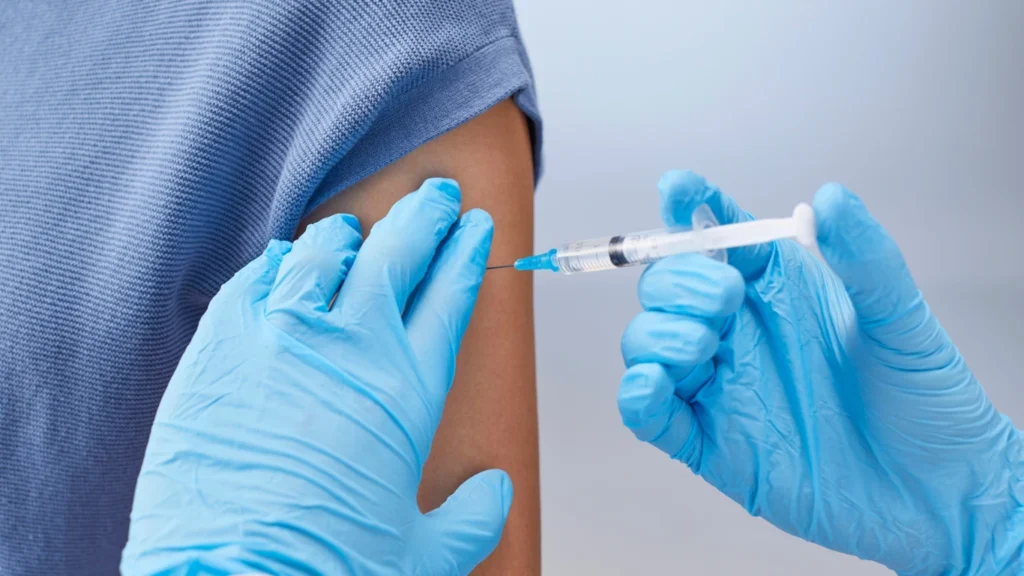
Concept image showing viruses and vaccination, highlighting the importance of measles prevention through immunization.
Measles cases spreading in the US: Status by age group for each year
Cases/Age
Till date 2026
Full year of 2025
Total Cases
1575
2285
Under 5 years
330 (21%)
584 (26%)
5 to 19 years
814 (52%)
1,015 (44%)
Above 20 years
424 (27%)
673 (29%)
Age unknown
7 (0%)
13 (1%)
Measles cases spreading in the US: Status by Vaccination for each year
Cases/Vaccination
Till date 2026
Full year of 2025
Total Cases
1575
2285
Unvaccinated or Unknown
92%
93%
One MMR dose
4%
3%
Two MMR doses
4%
4%
Almost 69% of confirmed measles cases were reported in 2026 compared to 2025.
Children and young people aged 5 to 19 years are affected by measles.
In both years, nearly 93% of unvaccinated people were affected by measles; this shows the importance of vaccination.
Measles cases spreading in the US: Status by Hospitalization for each year
Age/Hospitalized
Till date 2026
Full year of 2025
Total Hospitalized
5% (78 of 1575 cases)
11% (242 of 2285 cases)
Under 5 years
25 of 330
106 of 584
5-19 years
23 of 814
57 of 1,015
20+ years
29 of 424
79 of 673
Age unknown
1 of 7
0 of 13
Note
The total number of deaths was 0 in 2026 and 3 in 2025.
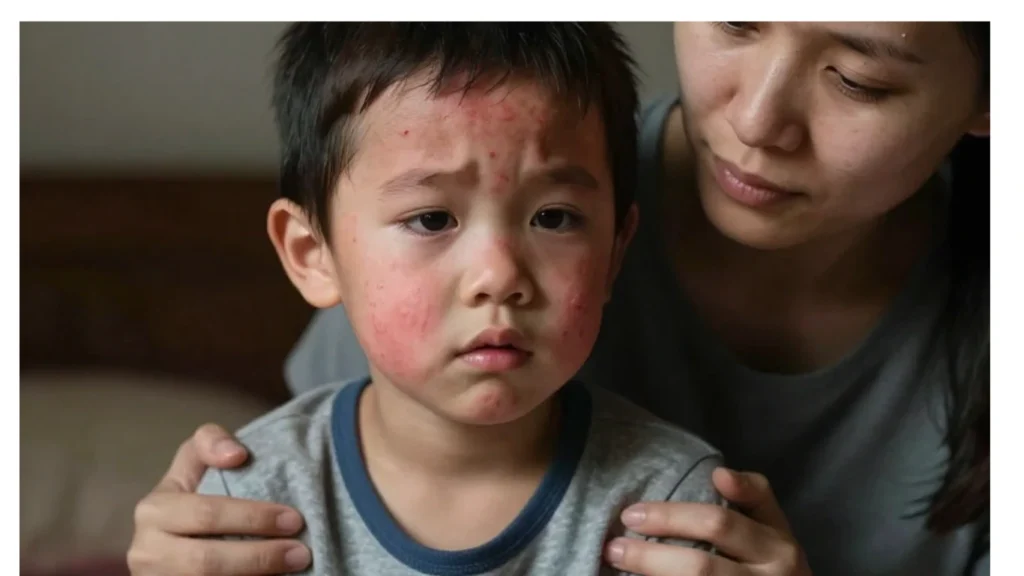
A child showing typical measles rash symptoms, highlighting the importance of early diagnosis and care.
Why Measles Cases Are Spreading in the US?
As per the CDC, the reason behind the measles cases
Measles cases are spreading in the US through travelers coming from around the world.
Measles cases are spreading in the US because of unvaccinated people.
Almost 9 of 10 people who lack immunity to measles and are close to an infected person will become infected because measles is so contagious disease caused by a virus, which is lives in nose and throat of infected person and it spreads easily through beathing, coughing and sneezing.
Why Measles Can Be Serious?
As per the NFID data mentioned below, measles can be treated as a serious disease.
About 1 in 5 unvaccinated people in the US who get measles will be hospitalized (Higher risk in children below 5 years of age)
1 out of every 1,000 people with measles will develop brain swelling, which could lead to brain damage
As many as 1 in 20 children with measles will get pneumonia
1-3 out of 1,000 people with measles will die, even with the best care
What are the major symptoms of Measles?
Measles symptoms usually show up around 7 to 14 days after contact with the person. Initial symptoms are
After 2 to 3 days of symptoms, you may see white spots inside the mouth called Koplik spots.
About 14 days after coming into contact with the virus, you may notice rashes on the face or neck that spread down the body from the chest to the arms and legs.
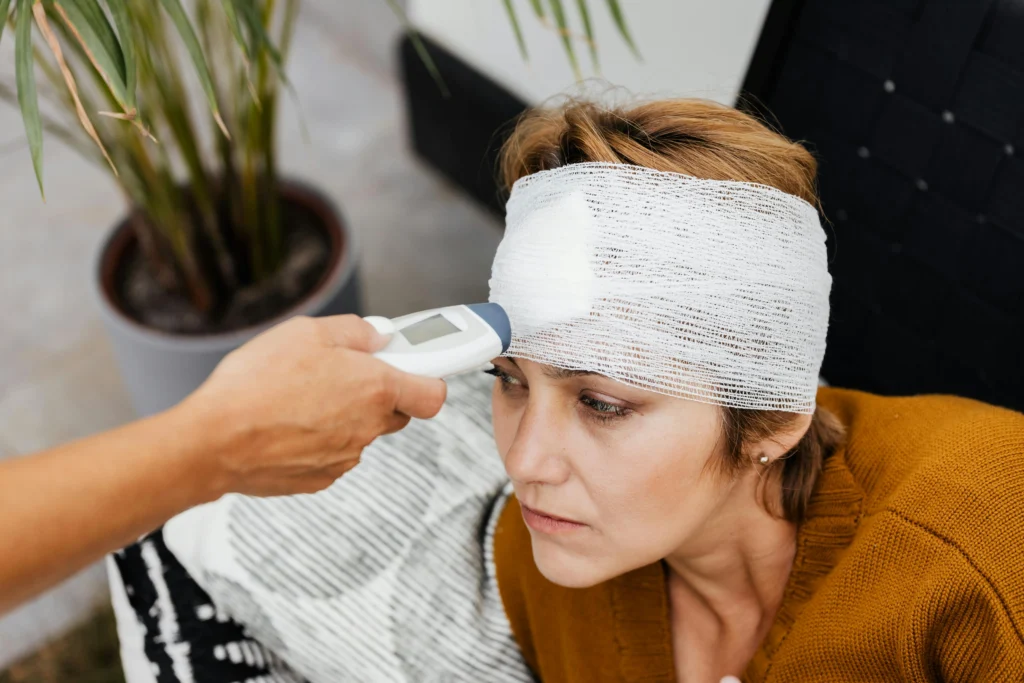
Fever is one of the early symptoms of measles, and monitoring body temperature is important for early detection.
Complications of Measles
Measles may lead to complications such as
Dehydration
Ear Infection
Bronchitis, laryngitis or croup: Measles may lead to irritation and swelling, called inflammation, of the airways. This inflammation of the airways is called croup.
Pneumonia: Measles can cause an infection in the lungs, called pneumonia
Encephalitis: About 1 in 1,000 people with measles can get irritation and swelling of the brain, called encephalitis.
Pregnancy complications: Getting measles while pregnant can put the pregnant person’s life in danger.
Which complications can lead to death?
Pneumonia (lung infection) and encephalitis (brain swelling) can lead to death. These are the groups of people at risk of these complications,
Children below 5 years
Adults above 20 years
Pregnancy women’s
People with weak immune system
People who are malnourished (especially with low Vitamin A)
These are rare but serious problems that can occur in people who have measles.
Measles can affect the brain or nervous system even years later
A rare condition called MIBE (Measles Inclusion Body Encephalitis) can occur in people with weak immunity
Another disease called SSPE (Subacute Sclerosing Panencephalitis) can appear 7–11 years after measles infection
Children who had measles before age 2 have higher risk.
Note
Measles can weaken the immune system After infection, children may:
Get sick more easily from other diseases
Lose protection from previous infections
Need to take some vaccines again
When to See a Doctor
if you think you or your child may have been around measles, Please call Health care professionals
if you or your child has a rash that looks like measles, Please call Health care professionals
As measles cases are increasing, it is necessary to check your family’s vaccination records with your healthcare professional.
Prevention
As per the CDC data, On average, 2 doses of the measles vaccine protect about 97% of people for life.
Vaccination makes measles much less severe and less contagious.
The MMR vaccine protects against measles, mumps and rubella.
The MMRV vaccine protects against measles, mumps, rubella and chickenpox, also called varicella.
Note
Do not take the measles vaccine if
You had a serious allergic reaction after the first dose of MMR/MMRV or to the antibiotic neomycin
You are pregnant
You have a very weak immune system due to illness or medical treatment
Measles vaccine in children
The CDC recommends that children get a measles vaccine between 12 and 15 months of age, and again between 4 and 6 years of age, before they start school.
The shortest time between the first and second dose of measles vaccine is 28 days.
Children 6 to 11 months old may get the vaccine early if they were exposed to measles or due to travel.
Measles vaccination helps protect individuals and prevent the spread of the disease.
FAQs
Why Measles Cases Are Spreading in the US?
Measles cases are spreading in the US. through travelers coming from around the world
Measles cases are spreading in the US. because of unvaccinated people
What are Koplik spots and how do they appear?
Koplik spots are small white or bluish-white spots that appear inside the mouth during the early stage of measles. Look like tiny white grains of salt with a reddish background
How many days does it take to recover from measles?
Most people feel better within 1 to 2 weeks, but tiredness may last a bit longer.
Mayo Clinic – Measles Symptoms, Complications, when to see a doctor and prevention
Conclusion
Why Measles Cases Are Spreading in the US? This is a common question among people in the U.S. because measles was declared completely eliminated in the United States in 2000. However, measles cases are increasing day by day, with serious complications, and sometimes it can lead to death.
If you or your child has a rash that looks like measles, it is very important to consult a medical professional, especially if you or your child are not vaccinated, as it may lead to serious complications. Vaccination is important for people of all age groups.
The MMR and MMRV vaccines protect against measles, mumps, and rubella. So, please take two doses of the vaccine under the guidance of healthcare professionals to stay protected from measles.
Disclaimer
The information about measles cases are spreading in the US in this article is for general awareness and educational purposes only and does not replace medical advice or treatment for measles.
This article provides only evidence-based information. If you think you or your child may have been exposed to measles, please contact a healthcare professional.