Is Psoriasis Contagious? Top 5 Symptoms and Complications Backed by Science
If you have thick areas of discolored skin covered with scales, then you may be suffering from psoriasis. Psoriasis is an autoimmune condition that causes inflammation in your skin.
An overreactive immune system can create inflammation in your skin, which leads to psoriasis. Psoriasis can run in families, which means it may be passed from parents to children through genes.
Usually, you can find psoriasis patients around you who have white, thin plaques on their face and body, as plaque psoriasis is the most common type.
“Is psoriasis contagious?” is the most common question. Here, I have explained it clearly in this article with proper evidence, real life examples, and simple language.
What is Psoriasis?
Psoriasis is an autoimmune skin disorder. It means your body’s immune system mistakenly attacks your own skin, causing problems. In this condition, the skin becomes itchy and uncomfortable. You may observe thick, red patches with white scales; these patches are called plaques. This is the most common type of psoriasis.
There is no permanent cure for psoriasis, but the disease can be controlled. Doctors may suggest special creams and ointments, which help reduce itching, redness, and scaling.
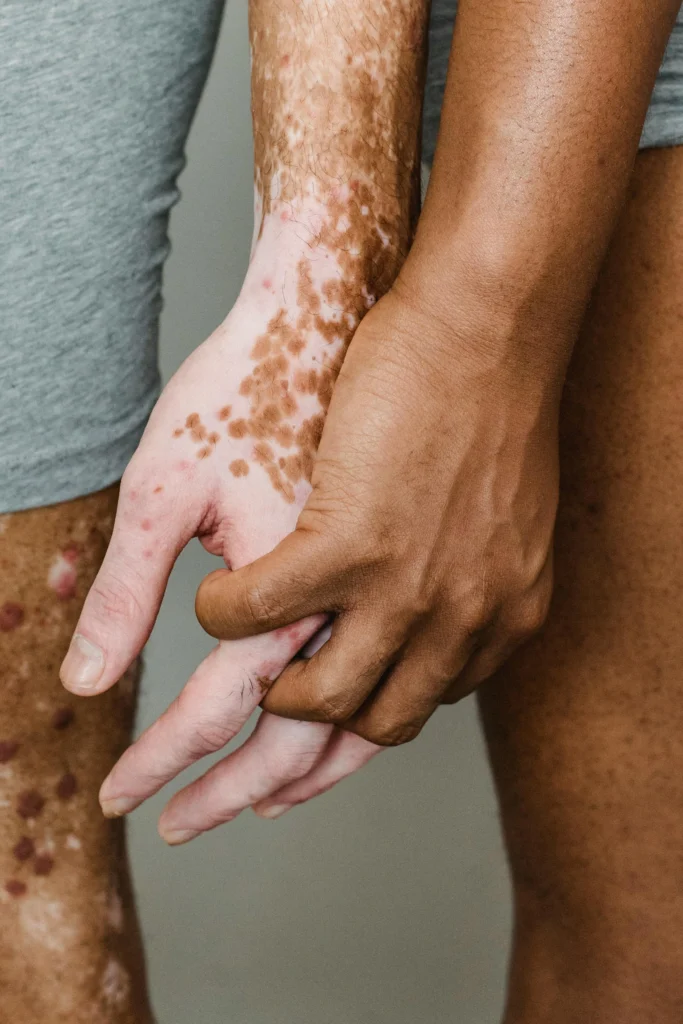
This image shows a person with a skin condition while being touched, helping illustrate that psoriasis is not contagious and does not spread through contact.
Types of Psoriasis
You may find several types of psoriasis in the table below.
Type of the Psoriasis
About the Psoriasis
Plaque Psoriasis
Most common Type and 80% to 90% of people with psoriasis have plaque psoriasis.
Inverse Psoriasis
appears in your skin folds. It causes thin plaques without scales.
Guttate Psoriasis
appear after a sore throat caused by a streptococcal infection, It looks like small, red, drop-shaped scaly spots
Pustular Psoriasis
small, pus-filled bumps on top of plaques.
Erythrodermic Psoriasis
severe type of psoriasis that affects a large area of your skin.
Sebopsoriasis
appears on your face and scalp as bumps and plaques with a greasy, yellow scale
Nail Psoriasis
Nail psoriasis causes skin discoloration, pitting and changes to your fingernails and toenails.
Symptoms of Psoriasis
In this case, skin plaques or rashes are common along with these you may observe
Itchy skin
Dry, cracked skin
Skin pain or burning feeling
Nail changes (pitted, cracked, or crumbly nails)
Joint pain (in some people)
Note
If you scratch the plaques, you may break the skin, which can lead to infections that can be very serious.
A handshake between two people highlighting that psoriasis is not contagious and cannot be spread through physical contact.
Causes of Psoriasis
The main cause is an overreactive immune system. If your immune system reacts normally, it protects you by fighting against germs like bacteria and viruses. If your immune system overreacts, it mistakenly attacks healthy skin cells, causing inflammation in the skin.
Normally, new skin cells grow within 30 days and replace the old ones. But in psoriasis, due to an overactive immune system, this process becomes very fast. Skin cells grow in just 3 to 4 days, which leads to scales and continuous skin shedding.
“Is psoriasis contagious?” is a common question, but it is not contagious. Psoriasis can be genetic and may run in families. Parents can pass it on to their children through genes.
Why do psoriasis outbreaks occur?
A psoriasis outbreaks happen when skin reacts to certain factors. These factors can irritate your body and make symptoms suddenly worse. common factors are
Emotional stress
Infections (like throat infection)
Skin injury (cuts, scratches, surgery)
Certain medicines (like lithium, beta-blockers)
Weather changes (cold or very dry climate)
Is Psoriasis Contagious?
Is psoriasis contagious? is a common question but it is not contagious because It is a body immune system problem, not an infection. You can’t psoriasis by touching some one who has it. It does not spread through
Touching skin
Shaking hands
Sharing things
When to see a doctor
It is very necessary to see a doctor
If your condition becomes severe or spreads widely
If it causes pain or discomfort
If you feel worried about your skins appearance
If your symptoms do not improve with treatment
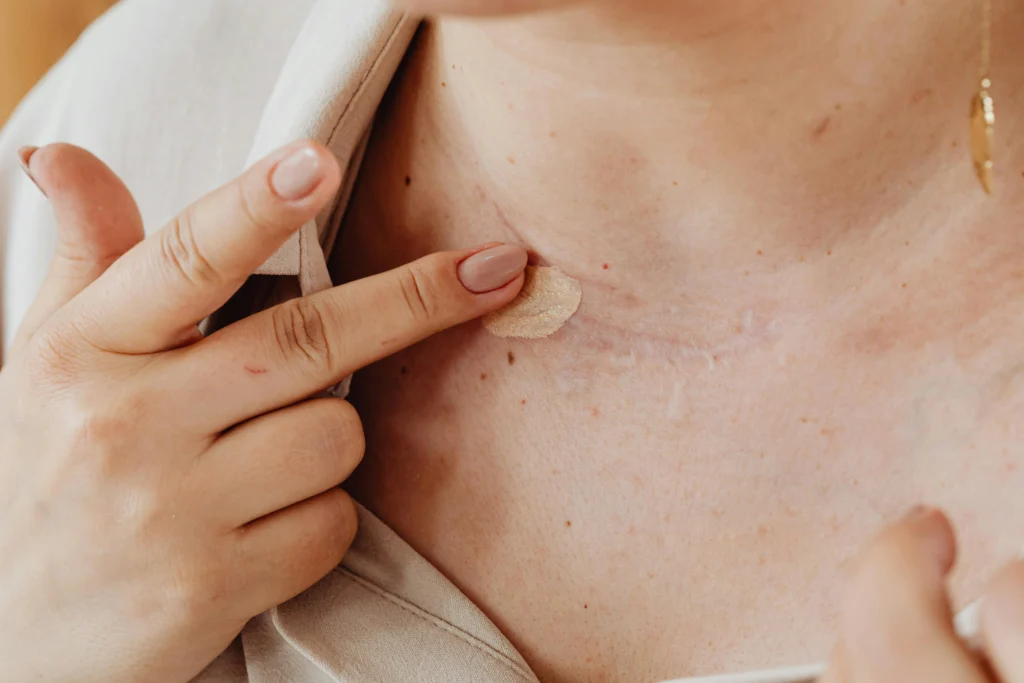
Close-up image of skin care and treatment, helping explain that psoriasis is a manageable condition and not a contagious disease.
Risk factors of Psoriasis
Anyone can develop psoriasis, but 1 in 3 people may get it during childhood. Some factors may increase the risk of psoriasis.
If you have a family history, your risk may increase. If one parent has psoriasis, your risk may increase; if both parents have it, your risk may be even higher.
Smoking increases the chance of getting psoriasis, and it can also make the disease more severe.
Complications of Psoriasis
If you have psoriasis, there is a higher chance of developing complications such as
Joint problems (Psoriasis arthritis), it causes pain, stiffness and swelling in joints.
Skin color changes, after healing skin color may change as lighter or darker.
Eye problems, Like redness, irritation, or inflammation
Other autoimmune disease, like celiac disease or Crohn’s disease
Mental health issues, Such as low self-esteem or depression
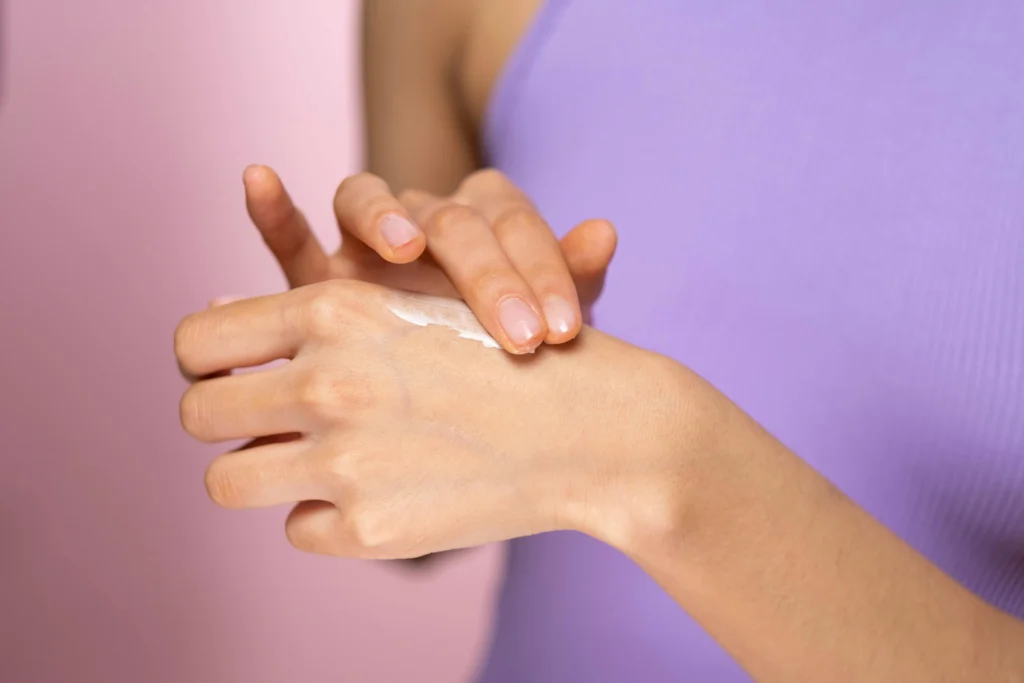
Applying moisturizer to the skin as part of psoriasis care, highlighting that psoriasis is manageable and not contagious.
Management and Treatment of Psoriasis
There are many treatment options to control psoriasis symptoms.
If psoriasis is mild or small areas, creams and ointments may be enough such as
Steroid creams, reduces redness and swelling
Moisturizers, takes care of dry skin
Anthralin (medication), slows skin cell growth
Medicated lotions or shampoos, useful for scalp psoriasis
Vitamin D3 ointment, helps control skin cell production
Vitamin A (retinoid) creams, improve skin condition
If rashes spread over large areas and if you have a joint pains then doctor suggests strong treatment. Your doctor may choose best treatment based on
How severe your condition is
Where the rash appears on your body
Your age
Youroverall health
Prevention of Psoriasis
There is no way to completely prevent psoriasis, But you can reduce the risk and control it by
Following your doctor’s treatment properly
Living a healthy lifestyle (good diet, exercise)
Taking good care of your skin (keep it moisturized)
Avoiding triggers that can cause flare-ups (like stress, injuries, infections)
Meditation and stress management can help control psoriasis symptoms, emphasizing that psoriasis is not contagious but influenced by lifestyle factors.
FAQs
What are the major body parts affected by psoriasis?
The major body parts affected by psoriasis are the scalp, elbows and knees, lower back, nails, face, ears, hands, and feet.
Is psoriasis contagious?
is psoriasis contagious? is common question but it is not contagious, It does not spread through touching skin or sharing things.
How can I take care of myself as a psoriasis patient?
Take care your self as a psoriasis patient by
Keep your skin well-moisturized
Follow your doctor’s treatment
Take short, gentle baths
Avoid triggers
Manage stress
Get safe sunlight exposure
Maintain a healthy lifestyle
References
Cleveland Clinic– Psoriasis overview, Types of psoriasis, Symptoms of psoriasis, Causes of psoriasis, Management and treatment, Is psoriasis contagious and Prevention
Mayo Clinic – When to see a doctor, Risk factors and Complications.
Conclusion
Is psoriasis contagious? is a common question but psoriasis is not a contagious, you can’t psoriasis by touching some one who has it. It does not spread through touching skin or sharing things.
Psoriasis is nothing but an autoimmune skin disorder. It means your body’s immune system mistakenly attacks your own skin, causing problems. In this condition, the skin becomes itchy and uncomfortable. Psoriasis can be genetic and may run in families. Parents can pass it on to their children through genes.
There is no way to completely prevent psoriasis, But you can reduce the risk and control it by following your doctor’s treatment properly, living a healthy lifestyle, taking good care of your skin and avoiding triggers that can cause flare ups like stress, injuries, infections.
Disclaimer
The information about “Is psoriasis contagious?” in this article is for educational and informational purposes only and is based on evidence from medical research sources. It should not replace professional medical advice. If you experience any symptoms of psoriasis, consult a qualified healthcare professional for proper treatment.
3 thoughts on “Is Psoriasis Contagious? Top 5 Symptoms Backed by Science”



3 thoughts on “Is Psoriasis Contagious? Top 5 Symptoms Backed by Science”